
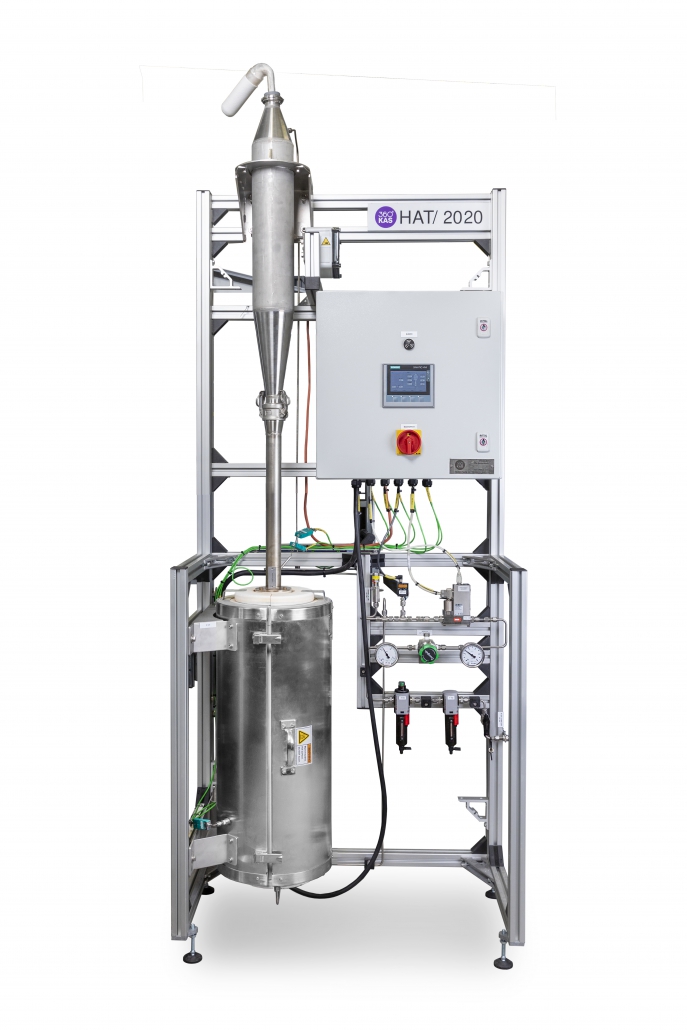
Spotlight on Bench-scale HAT Unit
Attrition of FCC catalysts can significantly impact refinery performance and costs. The 360°KAS Hot Attrition Test (HAT) unit offers a superior method to predict catalyst losses under realistic high-temperature conditions, helping refiners optimize operations and comply with emission standards.
Fluid Catalytic Cracking (FCC) catalysts are subject to particle breakdown, known as attrition, during operation. This process generates fines that must be controlled to meet environmental regulations and minimize operating costs. Attrition occurs due to forces such as air jets used for fluidization, inter-particle collisions, and impacts against reactor walls. Factors like particle properties, unit geometry, solids concentration, and flow rates all influence attrition rates.
Because attrition directly affects catalyst loss, it is essential that catalysts are sufficiently resistant. Laboratory tests can determine this resistance, but traditional room-temperature tests do not reflect real FCC conditions. Catalyst behavior at elevated temperatures (500°C to 750°C) can differ significantly, making high-temperature testing critical.
Introducing the Hot Attrition Test (HAT) Unit
To address this need, 360°KAS offers the Bench-Scale Hot Attrition Test (HAT) Unit, a technology originally pioneered by Albemarle and available since 2003. The HAT unit simulates commercial FCC operation by testing catalysts under realistic temperature conditions, providing accurate insights into attrition performance.
Key Features of the HAT Unit
- Realistic Testing Conditions: Operates at high temperatures for precise attrition measurement.
- Advanced Design: Includes air feed section, reactor with attrition plate, elutriation zone, and fines collection system.
- Comprehensive Control: PLC-controlled system with HMI interface for flow, temperature, timing, and data logging.
- Custom Options: Combine with Room Temperature Attrition Test (RT-AT), add lab equipment, or request installation and training services.
With the HAT unit, refiners can:
- Predict catalyst losses more accurately.
- Optimize FCC performance and reduce costs.
- Ensure compliance with emission regulations.